
Dynamic Pile Test (PDA)
Review pile design drawings, geotechnical report, and hammer details
Select representative piles based on diameter, length, and soil conditions
Inspect pile head condition and carry out trimming or leveling if required
Mark sensor mounting locations on pile shaft
Install strain gauges and accelerometers using approved fixing methods
Verify sensor alignment, cable connections, and data acquisition system
Calibrate PDA equipment and check signal quality
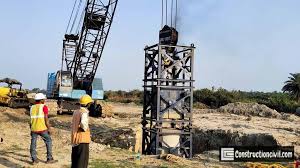
Apply controlled hammer blows with increasing energy levels
Record force, velocity, stress, and energy transfer data
Monitor pile stresses to ensure they remain within allowable limits
Conduct multiple blows for repeatability and data validation
Perform signal matching analysis to estimate static capacity
Evaluate pile integrity, toe resistance, and shaft friction
Assess hammer efficiency and pile drivability
Compile engineering analysis, plots, and conclusions
Dynamic Pile Testing (PDA) is a high-strain test that evaluates the load-carrying capacity, stress distribution, and overall structural integrity of deep foundation piles. It provides a rapid and cost-effective alternative to full-scale static load tests, particularly for projects involving multiple piles such as high-rise buildings, bridges, and industrial facilities. In Sri Lanka, where soil conditions vary from coastal sands to inland clayey or rocky formations, PDA testing ensures that piles are capable of safely transferring structural loads to the ground.
During the test, strain gauges and accelerometers are installed on the pile head. Controlled hammer impacts generate stress waves that travel along the pile shaft, reflecting from the toe and any discontinuities. The resulting force and velocity data are recorded and analyzed using specialized PDA software, which calculates dynamic load, shaft friction, toe resistance, and energy dissipation. The test also identifies potential structural anomalies within the pile, such as cracks, voids, or changes in cross-sectional area.
The outcome is a comprehensive report providing detailed information about pile capacity, hammer performance, and integrity evaluation. Engineers use this information to verify design assumptions, optimize pile installation procedures, and ensure that foundations meet safety and durability requirements. PDA testing is invaluable in minimizing construction risks, preventing over-design, and ensuring economic efficiency.
Contact
Reliable soil testing across Sri Lanka
Phone