
Noise Level Monitoring
Review project specifications, nearby receptors, and regulatory limits
Select monitoring locations for noise-sensitive areas
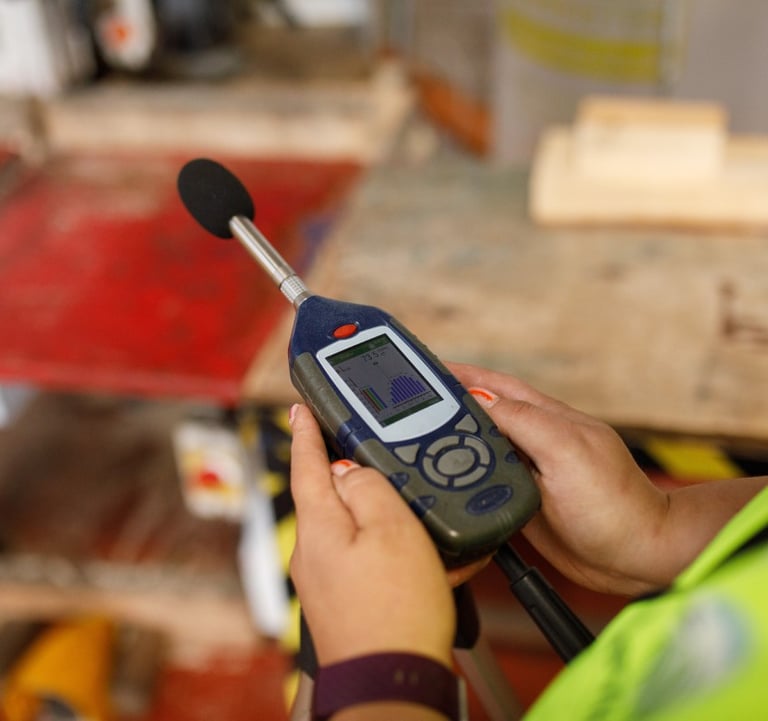
Install calibrated sound level meters at recommended heights
Establish baseline ambient noise levels before construction
Configure measurement parameters (LAeq, Lmax, Lmin, time intervals)
Conduct continuous or periodic noise monitoring during operations
Record noise levels and compare against regulatory limits
Analyze temporal trends, identify noise spikes, and potential sources
Recommend mitigation strategies for excessive noise
Prepare detailed monitoring report with graphs, tables, and interpretations
Noise Level Monitoring is conducted to ensure construction or operational activities comply with environmental regulations. Excessive noise can disturb local communities, wildlife, or sensitive industrial processes, and may lead to legal or social issues.
Calibrated sound meters measure noise over time at critical locations. Both ambient background and operational noise levels are recorded. By analyzing time-of-day variations and peak events, engineers can identify operations responsible for exceeding limits.
A comprehensive report provides data, graphs, and recommendations to reduce noise levels, such as scheduling noisy operations at appropriate times or installing sound barriers. Noise monitoring ensures regulatory compliance, protects the environment, and enhances community relations.
Contact
Reliable soil testing across Sri Lanka
Phone