
Pullout Testing
Review anchor or pile design details
Prepare test element and anchor head
Install reaction frame or kentledge system
Position hydraulic jack and load cell
Install displacement measuring instruments
Apply tensile load incrementally
Maintain load at each stage
Measure upward displacement
Observe anchor behavior
Continue loading to proof or failure load
Unload in stages
Record elastic recovery
Plot load-displacement relationship
Determine ultimate uplift capacity
Prepare engineering report
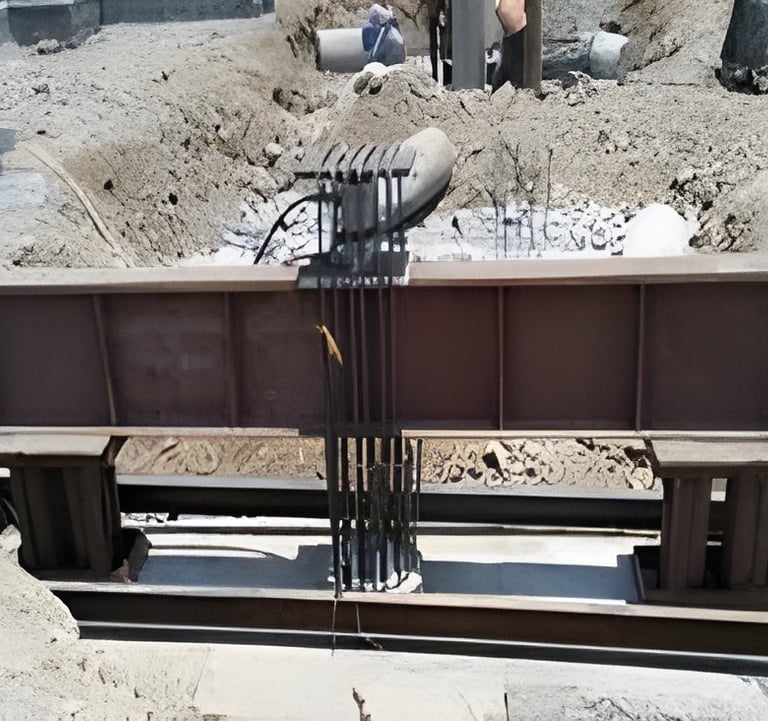
Pullout testing measures the uplift capacity of piles, anchors, or tiebacks under tensile loads. This test is essential for structures subject to uplift forces due to wind, hydrostatic pressure, or other environmental factors. In Sri Lanka, pullout testing ensures the safety of piles in high water table areas or coastal zones.
During testing, the anchor or pile is loaded incrementally in tension while displacement is measured. The load is maintained at each stage until either proof load or failure load is reached. Elastic recovery after unloading is also recorded to evaluate structural performance.
The test report provides ultimate uplift capacity, load-displacement relationships, and engineering recommendations. Pullout testing ensures that tension loads are safely resisted, helping to prevent uplift failure and safeguard structural stability.
Contact
Reliable soil testing across Sri Lanka
Phone