
Piezometer Installation and Monitoring
Review site conditions, soil profile, and hydrogeology
Drill boreholes at designated locations for piezometer installation
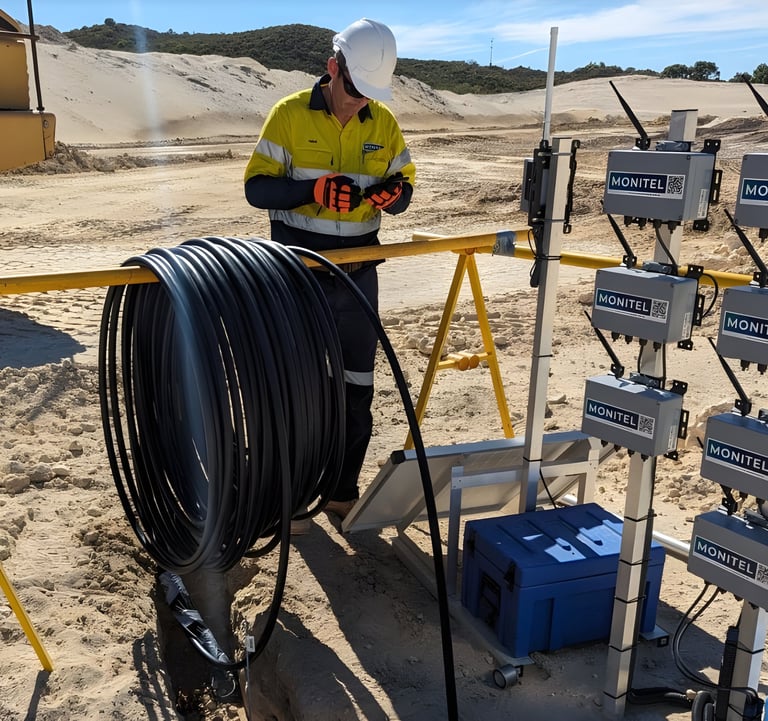
Install piezometer with proper filter zones for groundwater measurement
Seal borehole annulus with bentonite or grout for accurate readings
Install data loggers for continuous monitoring
Take initial baseline readings after installation
Conduct periodic measurements or continuous monitoring
Record groundwater levels and pore pressure variations
Analyze trends for seasonal or construction-induced changes
Compare readings with design or safety thresholds
Provide early warning for slope instability or foundation issues
Prepare monitoring report with recommendations
Piezometers are critical for monitoring groundwater pressure and fluctuations in soil or rock, which directly impact slope stability, excavation safety, and foundation performance. In Sri Lanka, where high water tables or heavy rainfall can affect construction, piezometer data is essential for safe geotechnical design.
The sensors provide continuous or periodic readings of pore pressure and water levels, enabling engineers to detect rapid changes that could trigger slope failures or foundation settlement. Data is analyzed against threshold limits to provide early warnings and proactive mitigation strategies.
Reports include groundwater trends, potential risks, and recommendations for construction adjustments, dewatering, or slope reinforcement. Piezometer monitoring ensures project safety, regulatory compliance, and risk reduction.
Contact
Reliable soil testing across Sri Lanka
Phone