
Lateral Load Testing
Review lateral load requirements and design criteria
Select test pile and prepare pile head
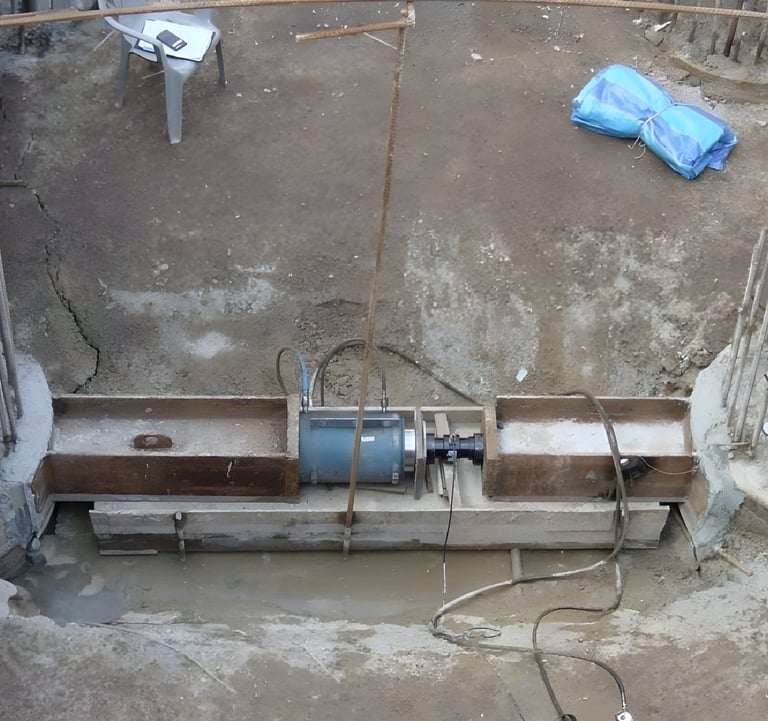
Design and install lateral reaction system
Install hydraulic jack and load measuring devices
Fix displacement gauges at appropriate elevations
Apply lateral load in incremental steps
Hold load at each stage for stabilization
Measure horizontal displacement and rotation
Monitor cracking or distress if any
Continue loading to test or failure load
Unload pile in stages
Record residual displacement
Plot load-displacement curves
Evaluate lateral stiffness and capacity
Issue technical report with conclusions
Lateral Load Testing evaluates pile performance under horizontal forces caused by wind, seismic activity, soil pressure, or operational loads. It provides critical information about lateral stiffness, deflection, and load-bearing capacity. In Sri Lanka, where infrastructure is often exposed to cyclones or seismic zones, this testing ensures stability and safety.
The test involves installing a lateral reaction system, applying incremental horizontal loads, and measuring lateral displacements and rotations using sensors. The behavior of the pile under load is observed and analyzed against design criteria. Load is applied until the design or ultimate lateral capacity is reached.
Reports provide load-displacement curves, lateral stiffness values, and performance evaluations. This allows engineers to verify pile suitability for horizontal loads, make design adjustments if necessary, and ensure long-term stability of the structure.
Contact
Reliable soil testing across Sri Lanka
Phone