
Soil Investigation
Conduct site reconnaissance and geotechnical survey
Drill boreholes or dig trial pits at strategic locations
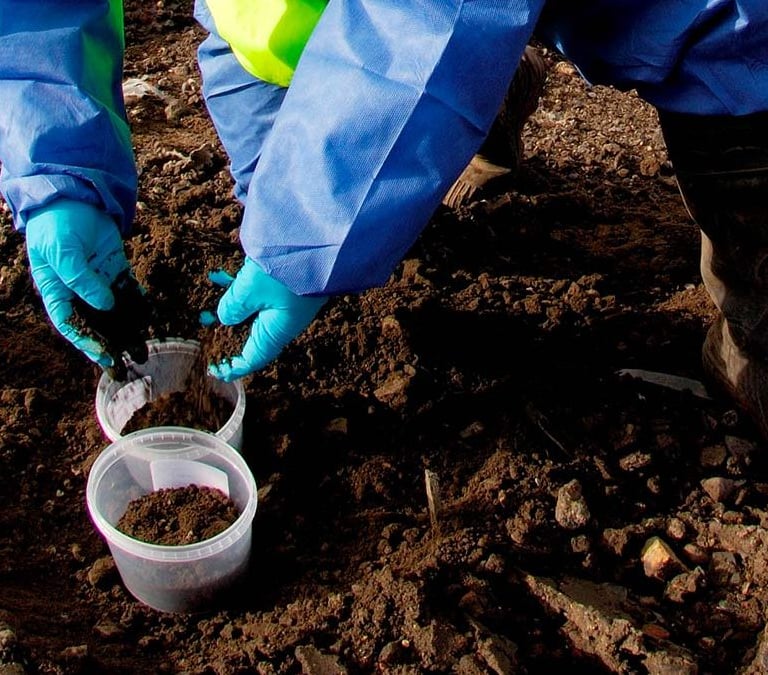
Collect disturbed and undisturbed soil samples
Conduct Standard Penetration Tests (SPT) or Cone Penetration Tests (CPT)
Record soil stratigraphy, groundwater table, and surface conditions
Conduct field tests for shear strength, density, and permeability
Transport samples to laboratory for further testing
Analyze results for bearing capacity, settlement, and soil classification
Interpret geotechnical data in relation to proposed structures
Prepare comprehensive soil investigation report
Soil investigation provides essential information about subsurface conditions, enabling engineers to design safe and economical foundations. Soil properties, layer thickness, and groundwater levels significantly affect structural stability and settlement.
Field exploration involves boreholes, trial pits, and in-situ testing to collect representative samples. Laboratory analysis determines mechanical and physical properties such as strength, compressibility, and permeability.
The final report provides soil profiles, bearing capacity, and recommendations for suitable foundation types. Accurate soil investigation reduces risk, ensures compliance, and optimizes foundation design.
Contact
Reliable soil testing across Sri Lanka
Phone