
Thermal Integrity Profile Test (TIP)
Review pile geometry and reinforcement details
Design thermal sensor layout along pile length
Install thermal wires or probes inside reinforcement cage
Secure sensors to prevent movement during concreting
Connect sensors to data logging system
Verify sensor functionality before concreting
Monitor concrete placement and logging start time
Record temperature data during hydration period
Continue monitoring until thermal stabilization
Generate temperature vs depth profiles
Identify abnormal temperature variations
Detect necking, bulging, or inclusions
Verify pile shaft shape and continuity
Compare results with design diameter
Prepare detailed thermal integrity report
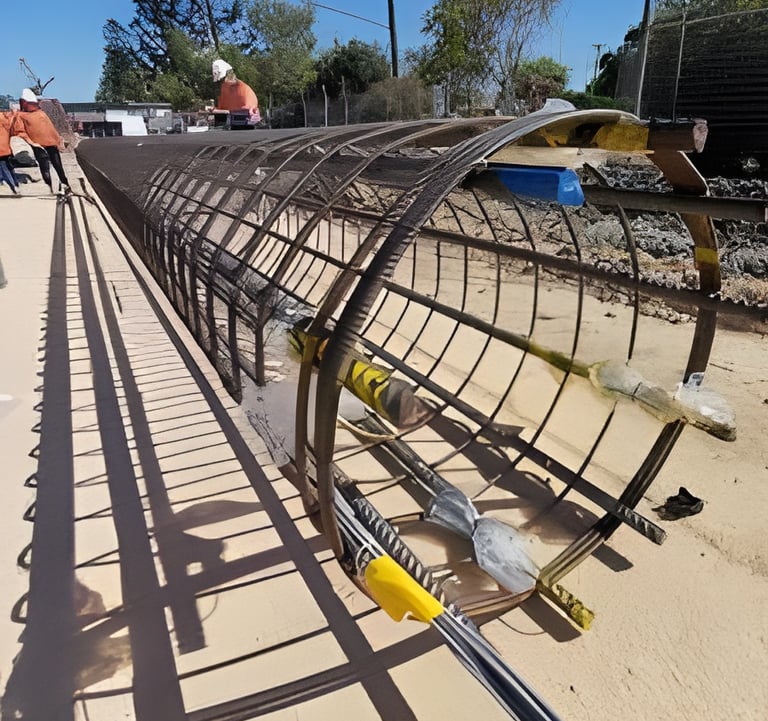
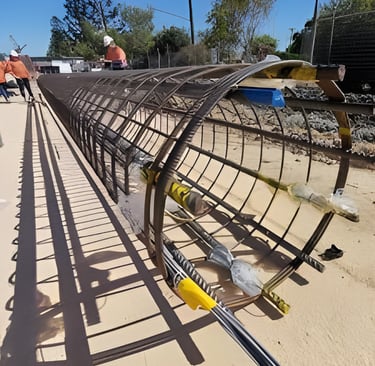
Thermal Integrity Profiling (TIP) is a non-destructive method that assesses the integrity and geometry of concrete piles by measuring temperature variations during curing. TIP is highly effective for detecting defects such as necking, bulging, or inclusions, and is widely used in Sri Lanka to ensure the quality of bored piles in variable soil and climate conditions.
The method involves installing thermal sensors along the pile shaft before concreting. As the cement hydrates, heat is generated and recorded at multiple depths over time. Abnormal temperature deviations indicate inconsistencies in pile diameter or concrete quality, allowing early detection of potential issues before the pile is subjected to structural loads.
TIP reports provide temperature profiles, defect locations, and engineering interpretations. This information helps designers and contractors verify construction quality, reduce the risk of foundation failure, and ensure that piles meet structural and durability requirements.
Contact
Reliable soil testing across Sri Lanka
Phone