
Static Load Testing
Review pile design load and test load requirements
Select test pile and verify curing period
Design and install reaction system
Position hydraulic jack and load cells
Install settlement measuring devices (dial gauges/LVDTs)
Establish reference frame independent of test pile
Apply load in predefined increments
Maintain load hold periods at each stage
Measure and record settlement over time
Observe pile behavior and stability
Continue loading up to test load or failure criteria
Gradually unload pile in stages
Record rebound and residual settlement
Plot load-settlement curves
Analyze allowable and ultimate capacity
Static Load Testing is the most reliable method for determining the actual load-bearing capacity of piles. It involves applying incremental loads to a test pile and measuring its settlement response, providing direct insight into pile performance. In Sri Lanka, static load testing is critical for high-rise buildings, bridges, and industrial structures where foundation safety is paramount.
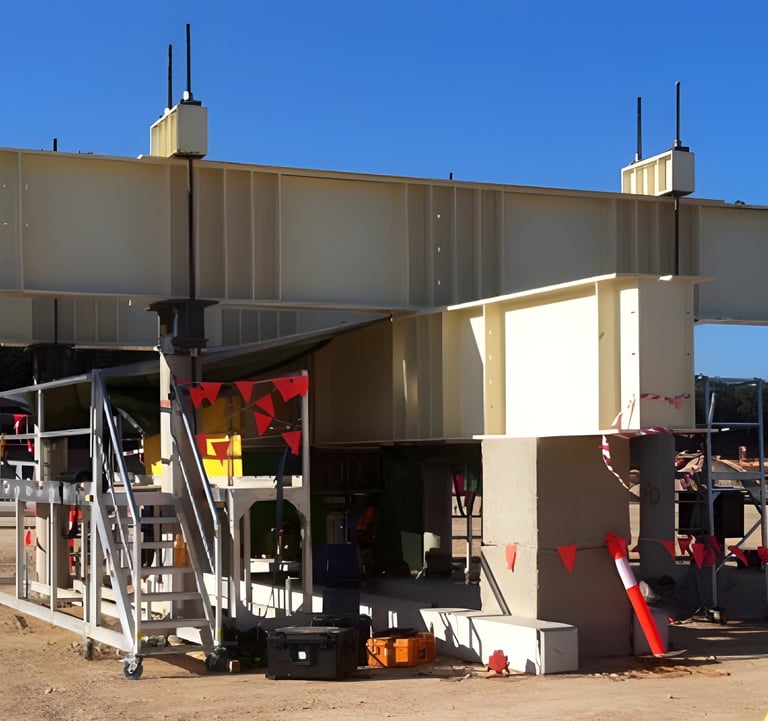
The test setup includes a reaction system, hydraulic jacks, and precise settlement measuring devices. Loads are applied in controlled increments, with hold periods to capture time-dependent settlements. Observations continue until the test load or failure criteria are reached. Both ultimate and allowable load capacities are calculated from the load-settlement curves.
The final report provides detailed load-displacement curves, analysis of settlement behavior, and recommendations for safe design loads. This method ensures foundation reliability, minimizes the risk of excessive settlement, and supports compliance with local and international engineering standards.
Contact
Reliable soil testing across Sri Lanka
Phone